
Search Cumberland County Death Records
Cumberland County death records are easier to manage when you know the name, the year, and whether the death belonged to a Crossville family or to someone who passed through the county later in life. Crossville is the county seat, and the county has a strong mix of public offices, library support, and state record paths. Because Cumberland County has ties to railroad development and a wide spread of local history, a death record search here often benefits from both office work and family history clues. If the first place you check does not answer the question, the next source usually does.
Cumberland County Death Records Facts
Cumberland County Death Records Sources
Start with the county office at Cumberland County government website. That portal gives you the county clerk, register of deeds, public notice, and contact information that can help you figure out where a related death record or supporting file lives. Cumberland County death records are not all held in one place, so the county page is often the fastest way to move from a name to the right office. Crossville residents may also use it to confirm office hours before they travel.
The county health path is tied to the Tennessee local health departments page. That source is useful for the modern death certificate side because the research notes the $15 certified copy fee, the ID requirement, and the option for walk-in or mail requests. The Art Circle Public Library gives Cumberland County a second local anchor. Its local history collection, Tennessee materials, and genealogy help can make a death record search much easier when the exact year is not firm.
For the state archive side, use the TSLA Cumberland County records inventory. That page helps place death records alongside court, deed, probate, and tax material that may support the search. It is especially useful when a record is old enough to sit outside the health office but still close enough to need a county clue. Cumberland County death records research works best when the county office, the library, and the archive inventory all stay on the table at the same time.
The Tennessee State Library and Archives guide shows the state pattern clearly: vital records guide.
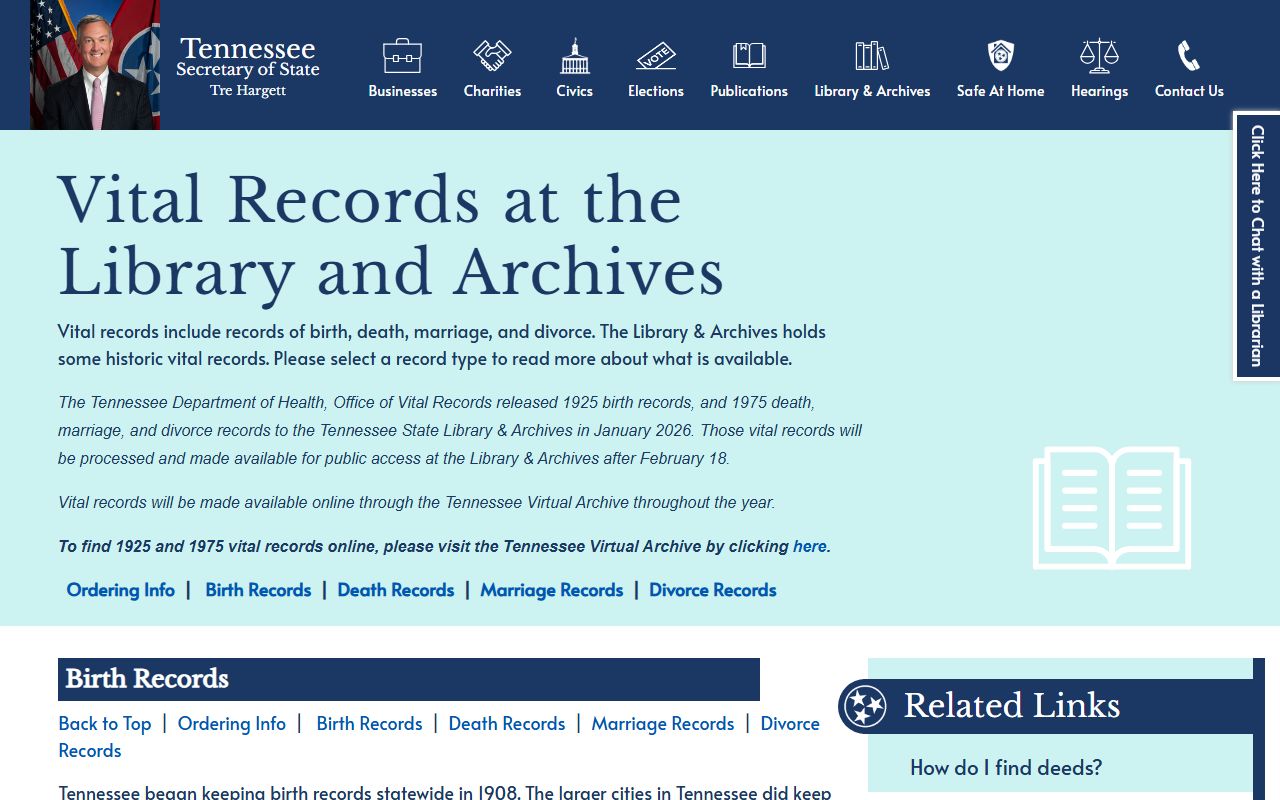
That guide explains why some Cumberland County deaths belong in a local search and others belong with the state office.
The modern request path is also shown by the CDC Tennessee vital records page: CDC Tennessee vital records information.
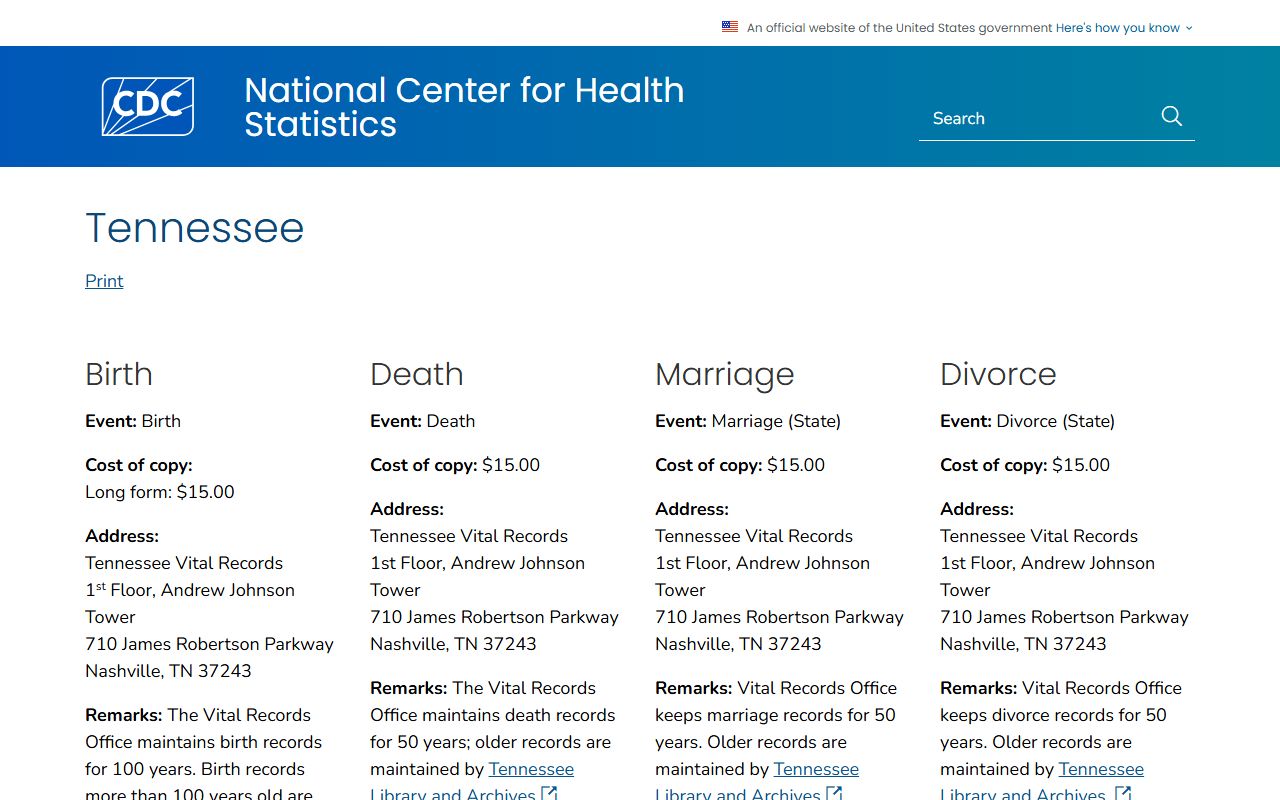
Use it to confirm the current order route, fee, and Nashville address before you send a request.
Cumberland County Death Records History
Cumberland County was established in 1855. That date is useful because it tells you the county has a long enough history for courthouse records, property files, probate materials, and cemetery clues to matter in a death search. Crossville later became the county seat, and the county's railroad history added another layer of local records and local names. In a place like this, the death record is often only one part of the paper trail.
For older Cumberland County death records, local history can carry as much weight as the index. A family may be easier to place through a railroad community, a church list, or a cemetery name than through a broad statewide search. The county library and the county office help narrow that field. Once you know the likely year, the state office or archive side becomes much easier to use. That is the practical part of the search.
The statewide death record system began in 1908 and changed again after 1912. Cumberland County searches can land in the small gap where a family story is clear but the index is not. When that happens, you should widen the spellings and look at the burial place, the spouse, and the town name. Those clues often push the search in the right direction faster than a second blind search does.
Note: In Cumberland County, railroad history and cemetery clues can be the fastest route to the right death record year.
How to Search Cumberland County Death Records
Begin with the simplest facts you have. The full name of the deceased matters most. After that, add a year or year range, then any spouse or parent name you know. If you have a burial site, use that too. Cumberland County death records searches improve when you make the query as narrow as possible because the county and state systems both reward clear details. A wide search can still work, but it usually takes longer and can bring back too many false matches.
The county government website helps you confirm which office may hold a related record or direct you to the right contact. The library can help with obituary leads and older local material, while the TSLA inventory can help you see what county records exist around the same time period. If your search looks thin, do not assume the record is gone. It may just be sitting in a different office than you expected.
Search spelling also matters in Cumberland County. Names can appear in a short form. Middle names may be used in place of first names. Family nicknames may show up in local history but not in the formal index. Try another version before you stop.
Keep these details handy when you search:
- Full name of the deceased
- Approximate year of death
- Crossville or another local place name
- Name of spouse, child, or parent
- Any cemetery or burial clue
Those few details often narrow the record path enough to make a real match.
Cumberland County Death Records Access
Modern Tennessee death records are handled through the state vital records office. The office keeps death records for 50 years, after which older records move to the archives side. That split is important for Cumberland County because it tells you whether to request a certified copy or to search an older collection. The fee listed in the research is $15 per certified copy, and the request generally requires a valid government-issued ID.
That process is backed by Tennessee law, which you can review here: Tennessee death records laws. The law explains why death records are filed, who can request them, and why some records live in a state office rather than a county drawer. It is not the search itself, but it gives the search its frame. That matters when the record is recent enough to be certified but old enough to need a separate request.
For Cumberland County, the practical rule is simple. Use the county office for contact clues, the library for local history, and the state office for the formal certificate. If one step does not work, move to the next instead of starting over.
Local Help in Cumberland County
Art Circle Public Library can be a strong helper when a death record search is missing a year or a burial place. Local history work often fills the gap between a name and a formal record. The county website can help you find office contacts, and the health department path can help you order a modern certificate if the death is recent enough. Those are different jobs, but they fit together well in Cumberland County.
When you are dealing with a family that moved through Crossville or another part of the county, do not rely on a single search word. Use place names, alternate spellings, and burial clues. If the person was buried in a small cemetery or tied to railroad work, local history sources may tell you more than the formal index does.
The county and the state sources work best when you use them in stages. That approach saves time and keeps you from missing a record that is already in front of you.