
Search Fentress County Death Records
Fentress County death records are easiest to search when you start with the year of death and the office most likely to hold the record. Jamestown is the county seat, so the county portal, the public library, and the state archive tools all matter here. Recent Fentress County death records usually begin with Tennessee vital records. Older records may move into TSLA, county history sources, or library help. That split is important because it keeps a search focused. It also saves time when you are trying to find a death certificate, a historical index entry, or a family clue that proves the right person.
Fentress County Death Records Facts
Fentress County Death Records Sources
The best local starting point is the Fentress County government website. It points to the county mayor, county commission, county clerk, register of deeds, regional health services, court system, public records, and contact information. That is the right first stop because a death record search often starts as a records question, then turns into a county office question. If you are looking for a recent Fentress County death certificate, the county portal helps you decide where the request belongs before you call or drive to Jamestown.
The county library is the next useful local source. The Fentress County Public Library offers local history, genealogy materials, reference services, computer access, a Tennessee collection, family history help, online databases, and interlibrary loan. Those tools matter when a death record is old, when a surname has shifted, or when you need an obituary clue before you order a certified copy. Fentress County research often works better when the library and the county office are used together.
Before you use the county portal, start with the Fentress County government website.
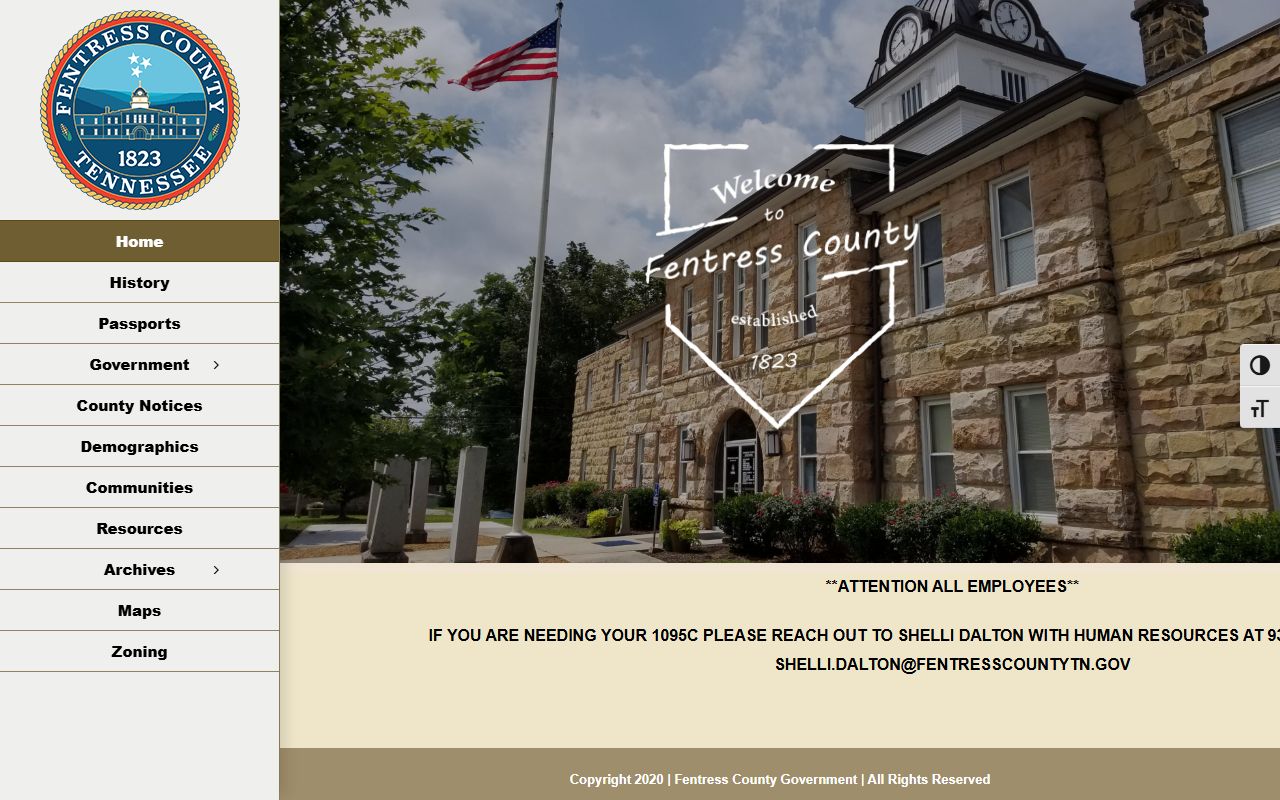
The county portal is the clearest local map for records contacts and office paths in Jamestown.
Fentress County also has a local history layer. The Fentress County Chamber of Commerce is not a death-record office, but it can still help you understand community history, local landmarks, and the kind of place where burial and family clues often appear in old notes. In a county like Fentress, that context can make the difference between a vague name and a clear search path.
Before you open the chamber resource, use the source link here.
This local page adds background that can help with cemetery clues, place names, and older family history work.
Note: A Fentress County death record search gets faster when you know whether you need a certificate, an index lead, or a family history clue, because each one points to a different office.
Fentress County Death Records Search
Tennessee state guidance gives the timeline that shapes every Fentress County death records search. The Tennessee State Library and Archives vital records guide explains that statewide death registration began in 1908, then changed after the short 1913 gap, when the newer law took effect in 1914. That means the year matters. A death in the early 1900s can require a different source than a death from the last few decades. If you search Fentress County death records without a date range, you may miss the right office altogether.
The state office is still the place for newer Tennessee death certificates. The CDC Tennessee vital records page gives the Nashville mailing address, notes that a signed government photo ID should accompany a request, and confirms the modern certificate path. The research also says Tennessee Vital Records keeps death records for 50 years. After that, the record path shifts toward the archives. That is the point where a Fentress County search changes from a certificate request into a history search.
When you search Fentress County death records, start with the name, then add location, year, and family ties. A spouse name, a parent name, or a burial clue can help when the spelling is rough. The archives guide also warns that some records use short forms, some women are listed under a husband name, and some infant deaths appear in special index forms. Those details matter in a county search. They are not side notes. They often decide whether the record is found at all.
To keep the search tight, gather these details first:
- Full name of the deceased
- Approximate year or date of death
- Jamestown, Fentress County, or burial clue
- Spouse, parent, or child name if known
- Any spelling change you have seen in family notes
The Tennessee death records law also helps explain access. You can read the statutory framework at Tennessee death records statutes. That law link is useful when you want to know why some records are certified at a health office and others sit in an archive collection.
Before you move on, use the state guide link directly: Tennessee vital records guide.
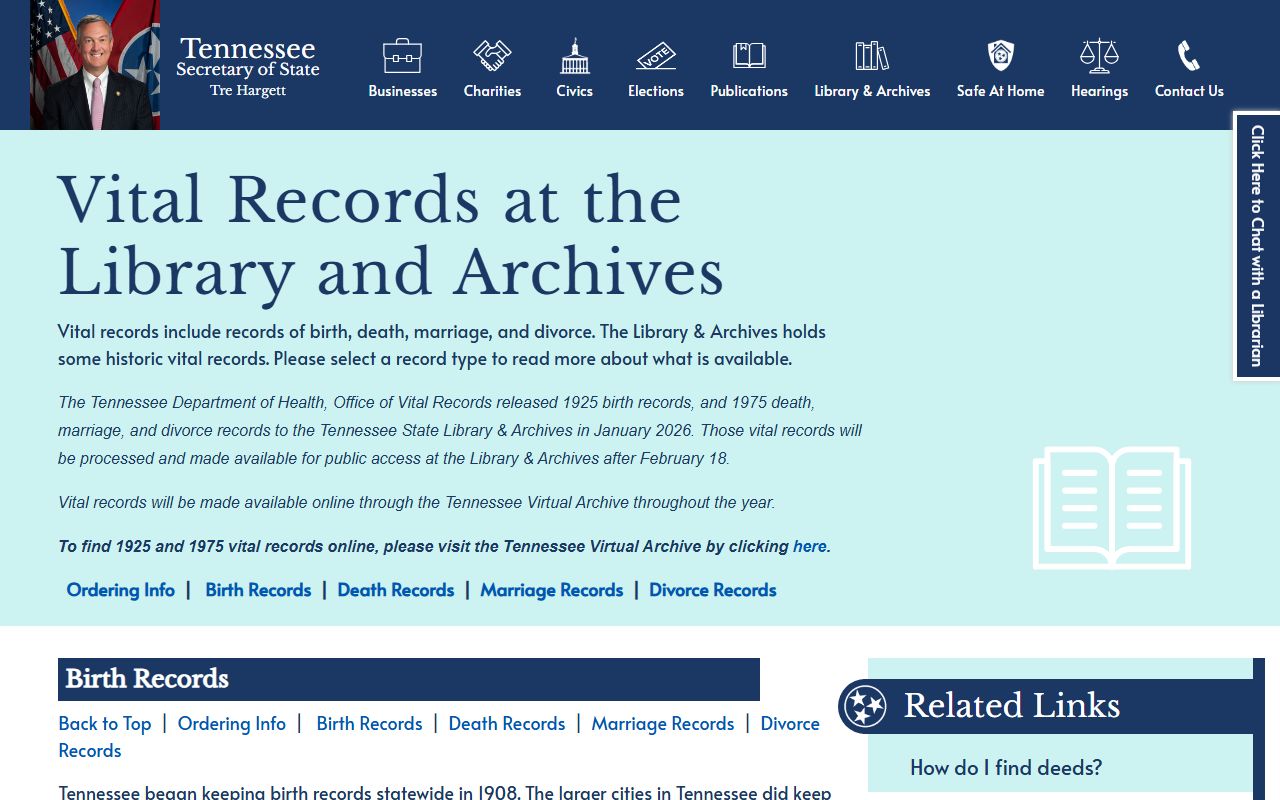
This guide gives the main date split that drives most Fentress County death records searches.
Fentress County Death Records History
Fentress County history gives the search more depth. TSLA notes that the county was established in 1823 and that court records, deed records, probate records, marriage records, tax records, and death records are available through state resources. That tells you something practical. A Fentress County death record may not stand alone. It may sit beside a probate file, a land transaction, or an older court reference that helps confirm the family. For historical work, the best search is often a layered search.
The Tennessee State Library and Archives county records page is useful because it shows that TSLA keeps county records research support and in-person access in the same system. When a death is too old for the local health office, that state archive path becomes the next logical step. If the name is hard to read or the date is not exact, a staff search may still find the right material.
Fentress County death records also connect to broader Tennessee records work. The Ancestry Tennessee records collection covers Tennessee death records from 1908 to 1965 through the TSLA partnership, which is useful when the county trail needs a quick index check. The TNGenWeb Project can also help with family and county context. It is not a certificate source, but it can point you toward names, places, and cemetery clues that make the Tennessee record search tighter.
Before you use the broader tools, note the TSLA county records page.

That state archive page helps connect Fentress County death records to the larger Tennessee record system.
Fentress County Death Records Help
Not every Fentress County death records search ends with a certified copy. Some searches end with a date, a burial place, or a family lead that lets you order the right certificate later. That is normal. The county library, county government portal, TSLA, and Tennessee Vital Records all play different parts. The best results usually come from using them in order, not all at once. Start local when the death is recent. Move to state and archive sources when the death is older. If the first search misses, try a second source before you assume the record is gone.
The Shelby County Register of Deeds death records index is also worth knowing about because it shows how a county office can keep a searchable death index that reaches across a wide date span. You may not need it for Fentress County, but it gives you a model for how Tennessee death records can be organized in other parts of the state.
The broader tools that still help here are the Fentress County Public Library, the Ancestry Tennessee records collection, and TNGenWeb.
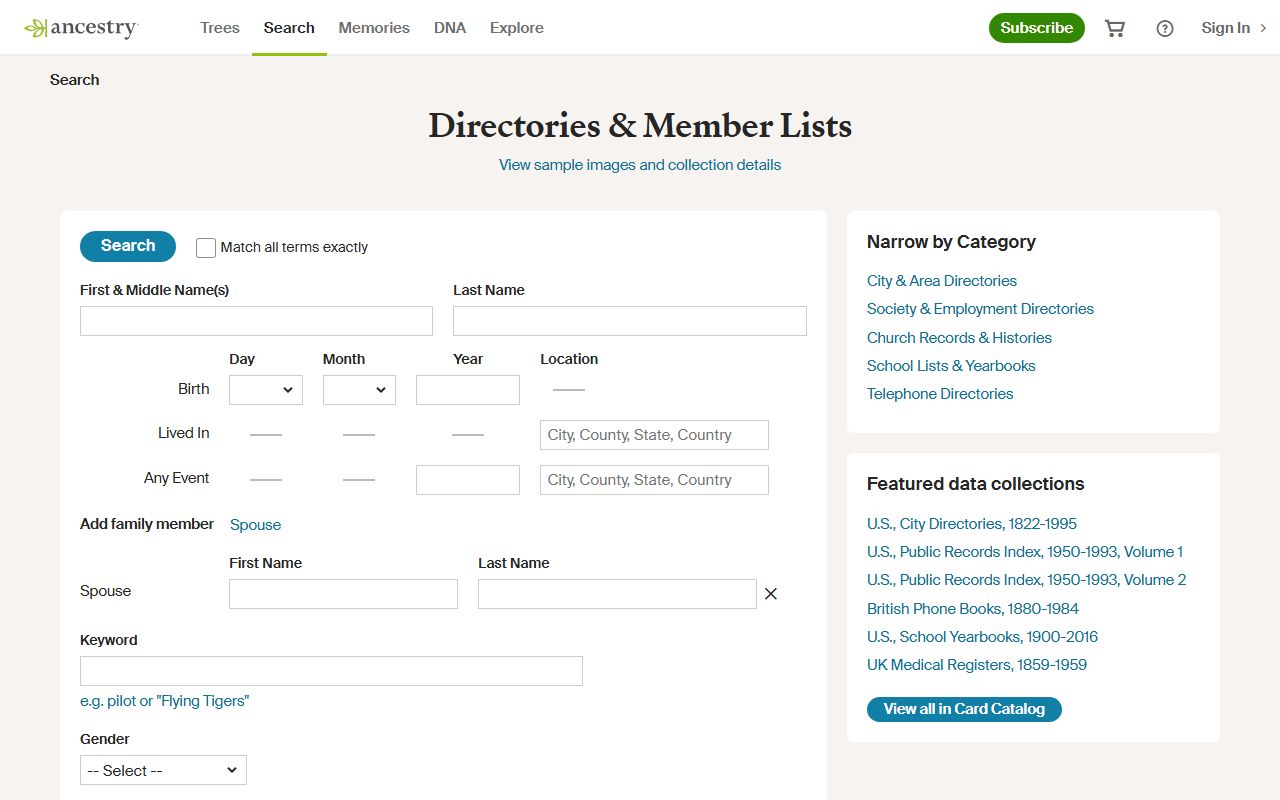
That collection is especially useful when a Fentress County search needs an indexed statewide check.
Note: If the death happened near 1913, check both county and state sources, since Tennessee has a registration gap year that can leave a record out of one index but not another.
More Tennessee Death Records
When the county clue is uncertain, compare Fentress County with other Tennessee county pages and the statewide guide. That helps you confirm the right office before you request a copy.