
Search Scott County Death Records
Scott County death records are easiest to trace when you start with Huntsville, Oneida, or Helenwood and then work into the county's library network, genealogy aids, and Tennessee state records. Scott County was formed in 1849, and the courthouse fire in 1946 means older death-record work often depends on more than one source. That is why the local libraries, the Robbins Book Station, the county public records page, and Scott County TNGenWeb matter so much. If a death is recent, the state office is the right route. If it is older, the county's microfilm, local history, and archive trail usually point to the right place faster than a broad search alone.
Scott County Death Records Facts
Scott County Death Records Sources
The Scott County public records page at Scott County public records is the first local place to start when you want routing, office direction, or a county-level clue for Scott County death records. It keeps the search tied to the county instead of guessing at a state office first. That matters in Scott County because a death record can lead to a court file, a clerk question, or a library reference before it becomes a certificate request.
The county libraries page at Scott County libraries is just as useful. It shows public libraries in Huntsville, Oneida, and Winfield, plus the Robbins Book Station. The page also says the county libraries hold local history collections and microfilm readers or film collections. For death-record work, that is a direct hint that a library stop may produce a burial clue, a newspaper clipping, or a family note that does not appear in a state index.
Scott County TNGenWeb at Scott County TNGenWeb gives genealogy and history support that fits the county's record trail. The optional history page at Scott County history page adds extra context for place names, families, and local research paths. In Scott County, that kind of support matters because Huntsville, Oneida, and Helenwood each show up in the county story in different ways, and a death record search often needs that place-level detail.
The TSLA fact sheet at TSLA Scott County genealogical fact sheet gives the county-history frame. TSLA says Scott County was formed in 1849, Huntsville is the county seat, and the courthouse fire happened in 1946. It also lists early records that help with death-record research: marriages from 1854, wills from 1892, deed index material from 1850, county court minutes from 1850, circuit minutes from 1850, and newspapers from Huntsville, Oneida, and Helenwood. The fact sheet also points to Tennessee death-record indexes as research aids, which is useful when a family line is easy to name but hard to place.
Note: Scott County death records are easier to sort when you tie the person to Huntsville, Oneida, Helenwood, or a local library clue before you request a copy.
Scott County Death Certificates
When you need a certified Scott County death certificate, the Tennessee Office of Vital Records is the correct state path. The current Tennessee vital records system requires a signed government-issued photo ID and a fee of $15 for a certified copy. That is the route to use for probate, insurance, estate work, or another formal purpose that needs a legal record instead of only a search result.
The state office keeps death records for 50 years. After that, older records move toward TSLA. So the real question is not just who died, but when. A recent Scott County death belongs in the state system. A death from long ago usually needs a county clue, a family clue, or a library trail first, especially if you are starting from a surname rather than an exact date.
The Tennessee Office of Vital Records keeps the process formal for a reason. A certified copy is a legal record, not a casual index hit. That is why identification matters and why the request works better when you include a full name, a date or narrow range, and a county clue. In Scott County, that county clue may come from Huntsville, Oneida, Helenwood, or a library note rather than from the certificate itself.
Before you use the CDC source image below, open the source first: CDC Tennessee vital records information.
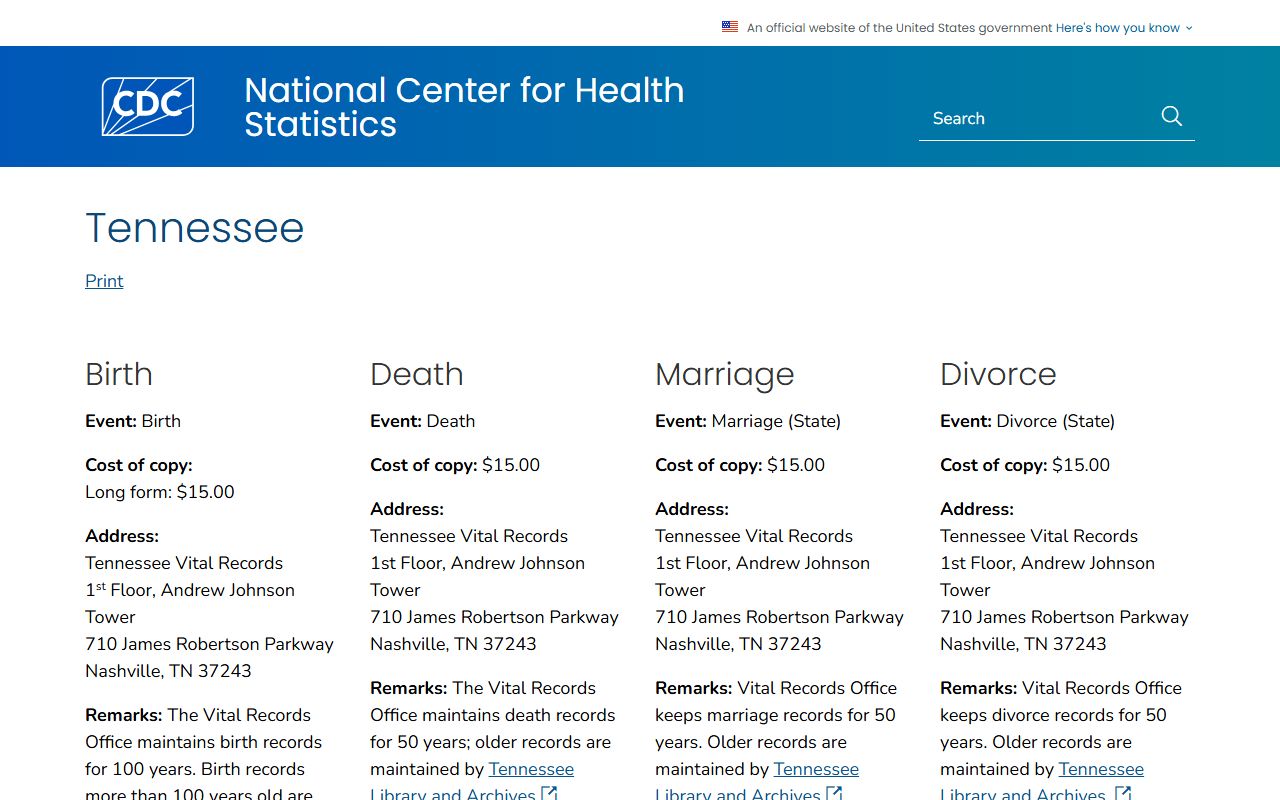
This page confirms the modern certificate process for Scott County death records and keeps the fee and ID rule in one place.
Scott County Death Records Libraries
The library trail is one of the strongest local tools for Scott County death records. The county libraries page names public libraries in Huntsville, Oneida, and Winfield, and it also points to the Robbins Book Station. That matters because local history collections and microfilm readers can turn a vague death search into a usable lead. A newspaper item, an obituary clipping, or a family folder often shows up there before it appears in a statewide index.
Huntsville is the county seat, so it often becomes the first stop for county-level work. Oneida matters too, because many Scott County families used that community as their daily center of life and records. Helenwood shows up in the county history and in the newspaper trail, so it is worth keeping in view when a death record is tied to a neighborhood, church, or burial place. The more local the clue, the more useful the library collections become.
The microfilm readers and film collections are especially important in Scott County because not every older death record survives in a neat online index. A film note may show a family name, a newspaper date, or a burial reference that points you to the right year. That is why the library page is not just a general county resource. It is a direct Scott County death records tool.
Scott County Death Records Archives
Older Scott County death records often belong with archive work first. The county was formed in 1849, and the TSLA fact sheet shows a deep record trail that includes county court minutes, circuit minutes, wills, marriages, deed indexes, and newspapers. That means a death search may need to pass through a court record, a library film, or a newspaper before it reaches a certificate line. In Scott County, that is normal and expected.
The Tennessee State Library and Archives portal at Tennessee State Library and Archives is the state archive gateway when a Scott County death record needs a broader historical search. It is the right place to move when the local trail runs thin but you still have a county name, a year range, or a family line to test. It also helps when you want to check whether a county record has already been preserved in state custody.
The TSLA vital records guide explains how Tennessee records move between county, state, and archive custody. That matters in Scott County because the courthouse fire and the age of the record can change which source makes sense first. A death from 1908 or later may still be handled differently depending on the year, and 1913 remains the dead year between statewide registration laws.
Before you use the TSLA guide image below, open the source link first: Tennessee vital records at the library and archives.
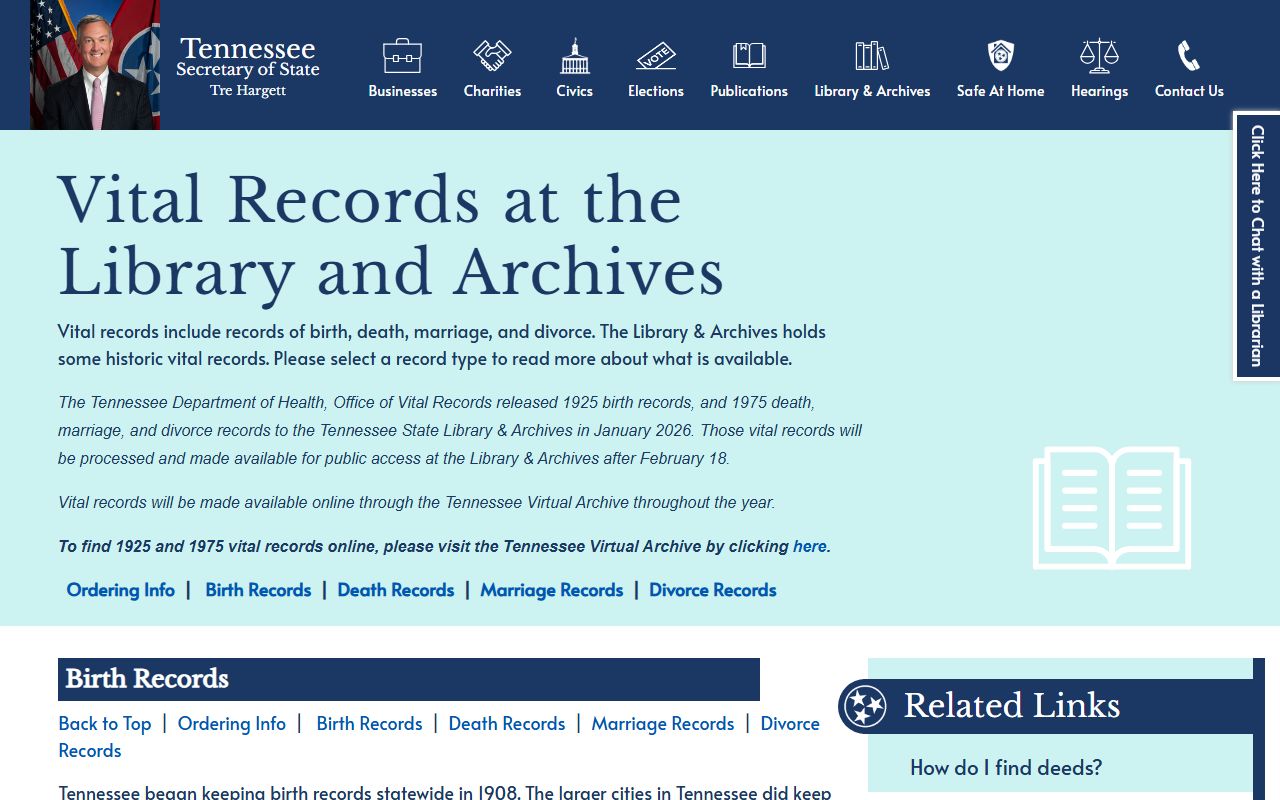
This guide helps you decide when a Scott County death record belongs in the archive path instead of the current certificate line.
The county history trail also pairs well with a broad index search. The Ancestry Tennessee records collection can help you test a date range before you move deeper into library or archive work. It is not a substitute for the county sources, but it can make a hard Scott County search more practical when the name is common or the family moved between communities.
Scott County Death Records Search Tips
Good Scott County death records searches start with a name, a place, and a year range. If you know the death is tied to Huntsville, use that first. If the family lived in Oneida or Helenwood, keep that close too. Small details matter because older county records often use spellings that do not match modern family memory. A spouse name, a burial place, or a library clue can solve a search that otherwise seems stuck.
Use these local steps first:
- Start with the Scott County public records page for routing and county direction.
- Use the county libraries page for local history collections, microfilm, and film readers.
- Check Scott County TNGenWeb and the history page for family and place clues.
- Use the TSLA fact sheet when the death looks old or the record trail is incomplete.
- Move to the state office only after you know the right year range and county clue.
Scott County death records searches work better when you keep the office roles straight. The library trail helps you find the person. TSLA helps you place the county record. The state office issues the certificate. When you move through those layers in order, you cut down on wrong guesses and duplicate searches.
The courthouse fire in 1946 is another reason to stay flexible. Some Scott County death records survive in books, newspapers, or microfilm even when the courthouse file is thin. That makes the library system and TNGenWeb especially useful. It also means a missing record does not always mean the death was never recorded. It may only mean you are in the wrong source first.
Scott County Access Rules
Scott County death records still sit inside Tennessee law and policy, even when the practical search begins with a library note or county history page. The Tennessee death records statutes explain the legal structure around registration, access, and certified copies. That page is not the first place to search, but it is useful when you want to understand why a record is restricted, why ID is required, or why a formal certificate matters.
The same statewide rules apply across counties. A recent Scott County death usually belongs in the state certificate system. An older record may have moved to TSLA or stayed visible only through county history sources. That is why the county office, the library trail, and the state archive path all matter in the same search.
If you need to sort a tough Scott County death records request, keep the county history, the library collections, and the state rules in the same workflow. That is the cleanest way to keep the search tied to Huntsville, Oneida, or Helenwood without losing time in a broad, unfocused search.