
Search Sequatchie County Death Records
Sequatchie County death records are easiest to sort when you begin in Dunlap and then move through the county clerk path, Tennessee State Library and Archives guides, and the state certificate process in order. Sequatchie County was formed in 1857, so the local record trail is older than many people expect. TSLA also points researchers to published county death records, cemetery books, and county vital statistics that make this county more usable than a plain statewide search might suggest. If the death is recent, the state office is still the right place for the certified copy. If it is older, the Dunlap research trail often gives the better first clue.
Sequatchie County Death Records Facts
Sequatchie County Death Records Sources
The best local overview for Sequatchie County death records is the TSLA Sequatchie County fact sheet. It notes that Sequatchie County was formed in 1857 and that Dunlap is the county seat. More important, it lists county-specific research aids that are directly useful for death-record work, including Death Records of Sequatchie County, Tennessee, 1881-1938, county vital statistics from 1914 through 1925, cemetery publications, wills, court minutes, and marriages. That is a stronger local death-record toolkit than many counties have, and it means the search can stay local longer before you need a state copy request.
The official county history page at Sequatchie County history helps keep that search grounded in place. County history pages matter in death-record work because place names, settlement patterns, and county-seat history often explain why a family shows up in one book, one cemetery survey, or one court minute and not another. For Sequatchie County, Dunlap is the anchor. When you know that, the county record path becomes easier to read.
The current county office routing point is the Sequatchie County clerk page. The clerk page is useful because a county death-record search often starts with a question about where a record might be filed, who handles related county paperwork, or which office can confirm the local path before you move to a Tennessee certificate request. It does not replace the state office for certified death certificates, but it does keep the search tied to the right county structure.
Local genealogy support also matters here. The Sequatchie County TNGenWeb page gives county history and local genealogy context that can help with surname placement, cemetery clues, and older research paths. In Sequatchie County, those extra county-level clues are useful because the same family can appear in court records, published cemetery work, and local death abstracts before a state certificate trail becomes clear.
Note: Sequatchie County death records become easier to trust when you line up Dunlap, the county fact sheet, and the published local death-record years before you request a copy.
Sequatchie County Death Certificates
When you need a certified Sequatchie County death certificate, the Tennessee Office of Vital Records is the correct state path. The CDC Tennessee vital records page keeps the current mailing address, the $15 certified copy fee, and the requirement for a signed government-issued photo ID in one place. That is the route to use for probate, insurance, estate work, or any other formal use that requires a certified copy rather than only an index or abstract.
The state office keeps death records for 50 years. After that, older records move toward TSLA. That timing rule matters in Sequatchie County because the county has unusually specific published historical resources. A recent death usually belongs in the state certificate system. An older death may be easier to prove through the county publication, a cemetery survey, or county vital statistics before you move into the archive or certificate layer. The year of death should control the order of the search.
Tennessee death registration also has a known gap. Statewide death registration began in 1908, the first law expired after 1912, and 1913 is the dead year before the next law took effect. That means some Sequatchie County deaths are easier to find through local books and county aids than through the first statewide source you try. The published county materials listed by TSLA are especially useful for that reason. They can fill the gap between family memory and a formal death record search.
Before you use the CDC image below, open the source link first: CDC Tennessee vital records information.
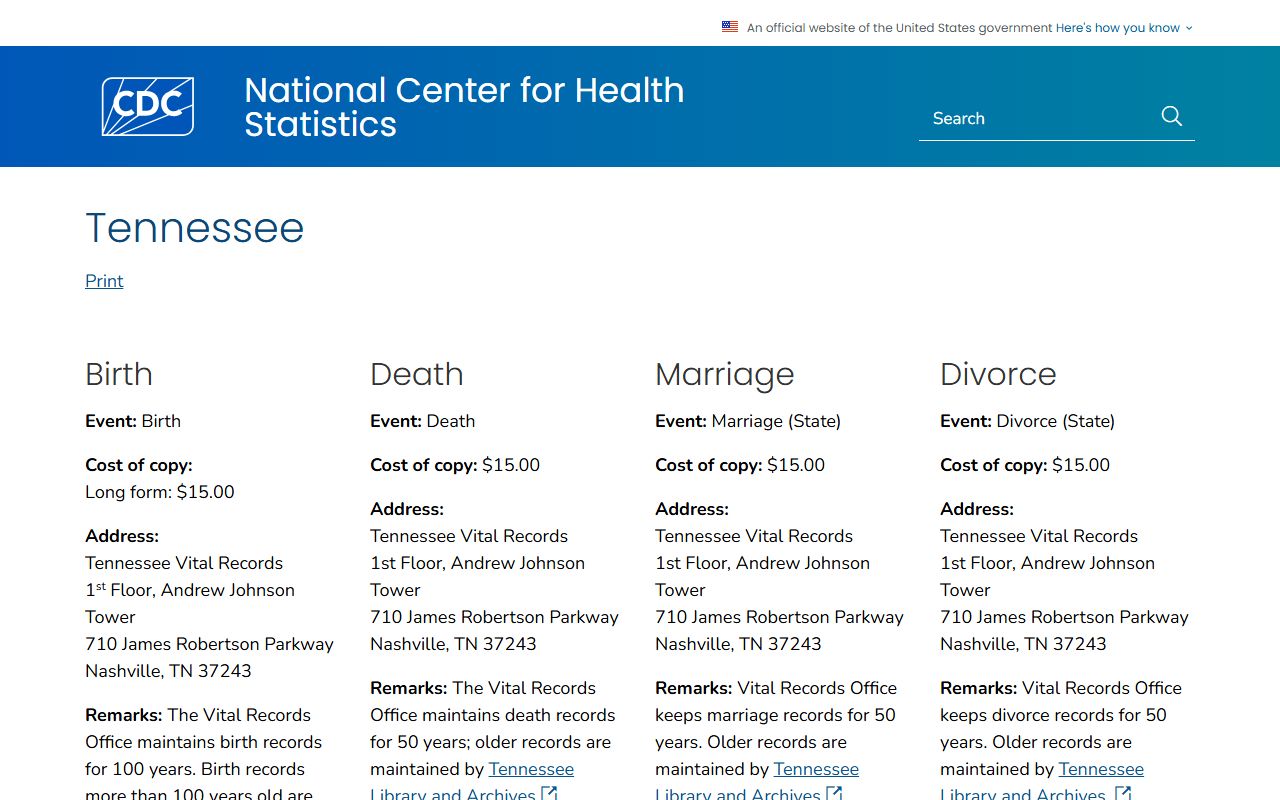
This page confirms the current state process for a Sequatchie County death certificate request and keeps the fee and ID rule in one place.
Sequatchie County Death Records Archives
Older Sequatchie County death records often make more sense through the archive trail than through a direct copy request. The county fact sheet points researchers to published death records for 1881 through 1938, county vital statistics for 1914 through 1925, cemetery books, wills, and court minutes. That is the kind of local record set that can solve a hard search fast. A cemetery entry can confirm the person. A published county death record can narrow the date. A will or court minute can connect the death to the right family. Those sources work together.
The statewide archive layer matters too. The TSLA vital records guide explains how Tennessee records move from active custody to archive custody and why some older deaths are easier to trace in archive material than in a current office request. That guide is especially useful in Sequatchie County because local books and county vital statistics already point you toward a historical search method rather than a modern certificate method.
The Tennessee State Library and Archives portal is the broader gateway when the county sources are not enough on their own. Use it when the death is old, when the county publication gives only part of the answer, or when you want to compare a local result against broader Tennessee archive holdings. For Sequatchie County, that state archive path is not a backup of last resort. It is a normal part of the search.
Before you use the TSLA guide image below, open the source link first: Tennessee vital records at the library and archives.
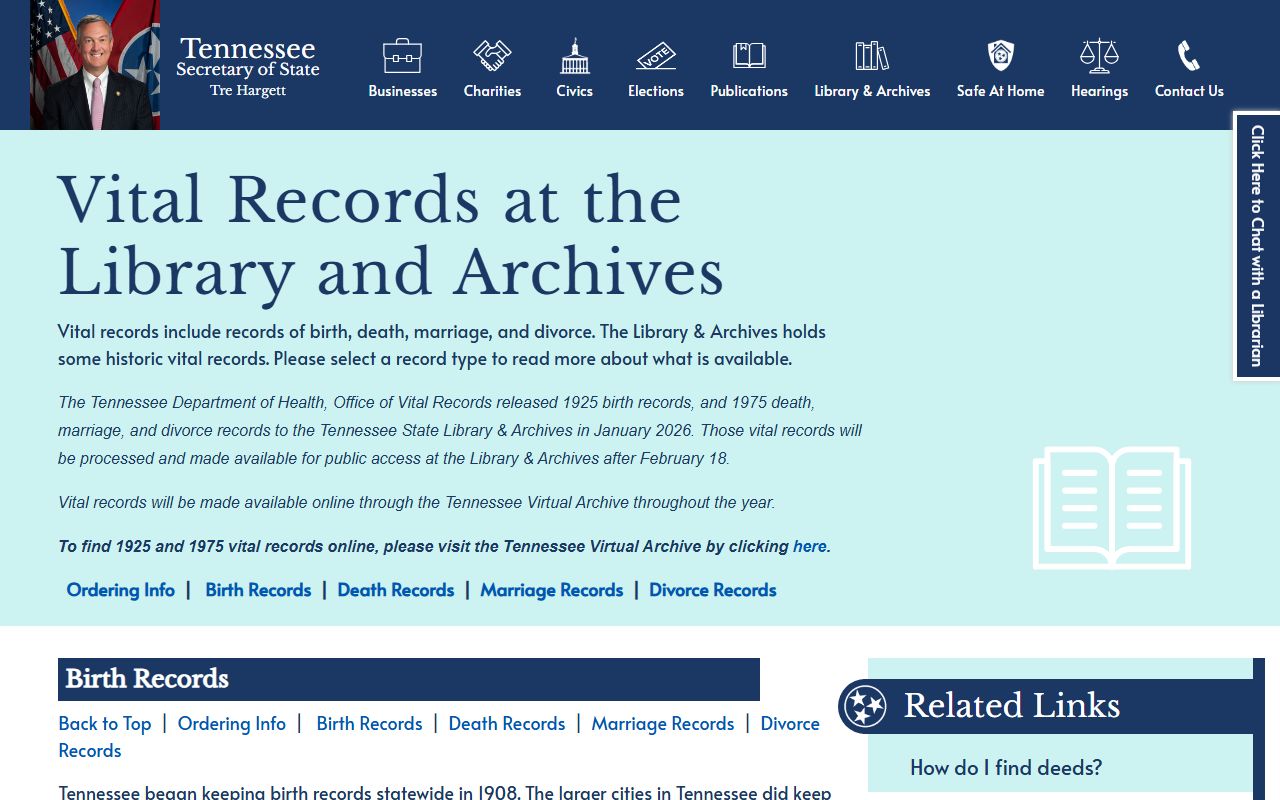
This guide helps you decide when a Sequatchie County death record belongs in the archive path instead of the current certificate line.
Before you use the TSLA portal image below, open the source link first: Tennessee State Library and Archives portal.

The portal is the main archive gateway for older Sequatchie County death records and related research help.
Dunlap Death Records
Dunlap matters because it is the county seat and the most practical local anchor for Sequatchie County death records. County seats matter in research because the local office path, the courthouse story, and much of the county memory are easier to follow there. When you are working on Dunlap death records, you are usually working on Sequatchie County death records with a clearer place clue. That keeps the search from turning into a broad statewide guess.
The official county history page helps give that local frame, and the county clerk page gives the present-day office frame. Those are different jobs, but both matter. The history page helps explain why families and communities are tied to Dunlap and the valley. The clerk page helps you keep the current county office structure straight when the question turns from local history to current records routing. In Sequatchie County, you often need both parts at once.
The county genealogy trail is also useful. The Ancestry Tennessee records collection can help with a statewide index clue, while Sequatchie County TNGenWeb can help with local history context and surname placement. That combination works well for Dunlap-centered searches because it lets you compare a broad index hit against the county's own record and cemetery trail before you request a certificate.
Before you use the Ancestry image below, start with the source link: Ancestry Tennessee records.
This index is useful for Sequatchie County death records when you want a broader Tennessee clue before you move back into Dunlap and county-specific sources.
Sequatchie County Death Records Search Tips
Strong Sequatchie County death records searches start with a name, a year range, and a place clue tied to Dunlap or the county itself. If you know the family cemetery, keep that close. If you know the death falls inside one of the published county ranges, use that early. Sequatchie County is one of the counties where the local publication years matter. A search gets easier when you know whether you should start with the county death-record book, county vital statistics, or a modern state certificate request.
Use this search order first:
- Start with the TSLA Sequatchie County fact sheet for the county-specific books and date ranges.
- Use the county history page to keep Dunlap and local place context in view.
- Use the county clerk page when you need local office routing.
- Check Sequatchie County TNGenWeb for genealogy and cemetery clues.
- Move to the state office or TSLA archive layer after the county clue is solid.
This order works because it keeps the search local first. In Sequatchie County, a published county source is often more useful than a blind statewide search. Once the county clue is strong, the state office or TSLA can do the rest more cleanly. If the first search fails, change the source, not just the spelling. One more county-level clue usually helps more than repeating the same statewide search.
Note: Sequatchie County death records usually move faster when you search by date range and county source type instead of relying on a single statewide index.
Sequatchie County Access Rules
The legal side of Sequatchie County death records comes from Tennessee law, not from the county clerk page alone. The Tennessee death records law explains the framework behind registration, custody, and certified copies. That matters when you want to know why a certified copy needs identification, why the county can help with routing but not issue the state certificate, or why the age of the record changes which office matters most.
The broader vital-records system also matters. The CDC National Vital Statistics System shows the larger registration framework behind death certificates and related data systems. That does not replace Sequatchie County sources, but it does help explain why a county publication, a state certificate file, and an archive index can all describe the same death in different ways. Knowing that keeps the search realistic and keeps you from assuming a missing result means the person is not in the record trail.
If you are moving from a county clue to a certificate request, keep the TSLA fact sheet, the county clerk page, and the CDC Tennessee vital-records page in the same workflow. That is the cleanest way to connect Dunlap and local county history with the formal Tennessee certificate process. It also helps keep Sequatchie County death records specific and local instead of washed out into generic state copy.
Before you use the national vital statistics image below, open the source link first: CDC National Vital Statistics System.

This source helps explain the standardized death-certificate system behind Sequatchie County death records and Tennessee filing practices.