
Search Smith County Death Records
Smith County death records often start in Carthage, then branch into local history, library work, and Tennessee state records. That is a good fit for Smith County because the county has a long paper trail and a strong local research habit. The county was formed in 1799, so older deaths can sit beside cemetery books, county histories, and library clues that help identify the right person before you request a copy. If you know the family name but not the exact record, the Carthage research trail is usually the best place to begin.
Smith County Death Records Facts
Smith County Death Records Sources
The best county starting point is the TSLA Smith County genealogical fact sheet. It says Smith County was formed in 1799 and names Carthage as the county seat. That is useful because a death record search in Smith County often depends on older local context, not just a state certificate index. The fact sheet also points to published local records, including cemetery books, county histories, and other research aids that can help identify the right family before you order a copy.
The county government context matters too. The Smith County Mayor's Office gives the official county framing tied to Carthage. It does not issue death certificates, but it does show where county identity and local administration are centered. That kind of local anchor helps when a death record search needs a place name, a county seat, or a government reference before you move into state records.
Smith County also has a useful local library trail. The Smith County Public Library lists both the Carthage Branch and the Gordonsville Branch. That is valuable for death record work because local libraries often hold family-history tools, cemetery references, and county materials that are not present in a statewide index. If the person you are tracing lived in Smith County for generations, the library trail can be the first real clue.
The broader Smith County TNGenWeb materials, including Goodspeed's Smith County history page, add county background that can help you place an older death in the right era. TNGenWeb is not a certificate office. It is a research aid. In Smith County, that can be enough to connect a surname, a place, and a date range before you request a certified record.
Smith County Death Certificates
When you need a certified Smith County death certificate, the Tennessee Office of Vital Records is the correct state path. The CDC Tennessee vital records page gives the current state contact and the basic ordering rules, including the fee and identification requirements. That matters because the county library and genealogy sources can help you find the record, but they do not replace the state-issued copy when you need a legal document for probate, insurance, estate work, or another formal use.
The state timeline is the next key point. Tennessee keeps death records for 50 years at the state level. Older records move toward TSLA. That means the year of death drives the search. If the death is recent, the state office is still the place to go. If the death is old, the county history trail and TSLA tools become more important, especially in a county like Smith where published local records can help solve the search before the certificate request is filed.
Certified copies are formal records. A request should include enough detail to narrow the right entry. Full name, county, approximate year, and any local clue can save time. In Smith County, a Carthage clue, a church name, or a cemetery note can matter just as much as a date. That is why the local research trail and the state copy process should be used together, not separately.
Before you use the CDC image below, open the source link first: CDC Tennessee vital records information.
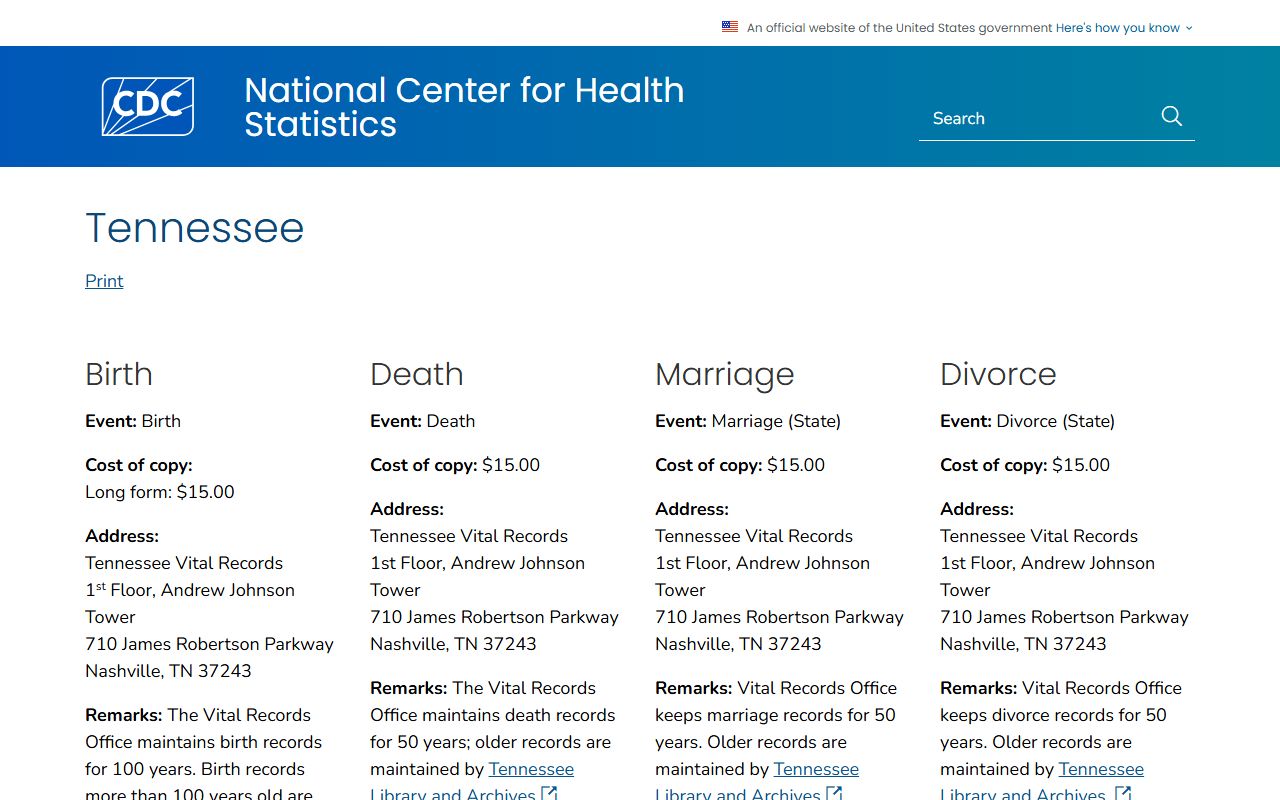
This page confirms the state process for a Smith County death certificate request and keeps the fee and ID rule in one place.
If you are only trying to identify a person, use the county tools first. If you need the legal copy, use the state path after the local search narrows the record.
Carthage Death Records
Carthage is the county seat, so it sits at the center of Smith County death records work. A county seat matters because that is where county life is most visible and where local records, civic history, and public services are easiest to connect. When you search Carthage death records, you are really searching the county through its administrative center. That is useful because many older Smith County records are easier to understand once the town, county seat, and family line are all in the same frame.
The Smith County Public Library is a practical local place to start when a death record is not obvious. The Carthage Branch and Gordonsville Branch give the county a local research base. That can help with cemetery books, county histories, and family reference tools that lead to the right person. For older Smith County deaths, a library clue can be more useful than a broad index because it helps you confirm which family line belongs in the county at all.
Smith County history also helps. The TNGenWeb Smith County history material can give you older county background that makes sense of a death record search, especially when a family appears in more than one place. It is a research aid, not a certificate source. Still, it can point you toward a cemetery book, a county history, or a local line that makes the record easier to find.
Before you use the TSLA portal image below, open the source link first: Tennessee State Library and Archives portal.

The TSLA portal is useful when a Carthage death record needs a broader archive search or a county-history backstop.
The local library trail and the TSLA record trail work well together in Smith County.
Smith County Genealogy Trail
Smith County has a strong genealogy trail, and that matters for death records. The TSLA fact sheet points to published local records, cemetery books, county histories, and other research aids. Those tools can help you prove identity before you ever order a copy. In a county formed in 1799, that is often the smarter route because the record you need may be easier to recognize in a local history source than in a blind search result.
The Smith County Public Library adds another practical layer. Its Carthage Branch and Gordonsville Branch give local researchers a place to look for family-history tools and county references. That is especially helpful when a death record search starts with a surname and a family memory instead of a certificate number. Local library help can turn a vague clue into a usable year range, which saves time at the state level.
Before you use the TNGenWeb image below, open the source link first: Goodspeed's Smith County history page.

This local history source is useful when Smith County death records need a surname, place name, or old county clue before the certificate search begins.
In practice, the genealogy trail is what helps Smith County research feel local instead of generic. That is exactly what you want when the goal is the right death record, not just any record with the same name.
Smith County Death Records Search Tips
Good Smith County death records searches start with a name, a place, and a time frame. If you know Carthage, use it. If the family lived near Gordonsville, keep that in the search too. Small details matter because older records may not match modern spelling or family memory. A cemetery book, a county history note, or a local library clue can be the missing piece that makes the record fit.
Use the county and state sources in a steady order:
- Start with the TSLA Smith County fact sheet for county formation, Carthage, and local records.
- Use the Smith County Public Library for Carthage Branch and Gordonsville Branch research help.
- Check Smith County TNGenWeb history material for older local context and family clues.
- Move to the CDC Tennessee vital records page when you need a certified copy.
- Use Ancestry Tennessee records when you want a broader index to compare against your local clues.
This order works because it keeps the search local before it gets broad. Smith County has enough history that one cemetery reference or one county history entry can make the difference. If the person lived in Carthage for most of their life, that local anchor may be the best way to separate them from someone with a similar name elsewhere in Tennessee.
The state timeline still matters. Tennessee statewide death registration begins in 1908, the first law expired at the end of 1912, and 1913 is the gap year between laws. If you are searching that period, expect some Smith County deaths to show up in one source and not another. That is normal. It is another reason to start local and work outward only when the county clues are clear.
Before you use the Ancestry image below, open the source link first: Ancestry Tennessee records.
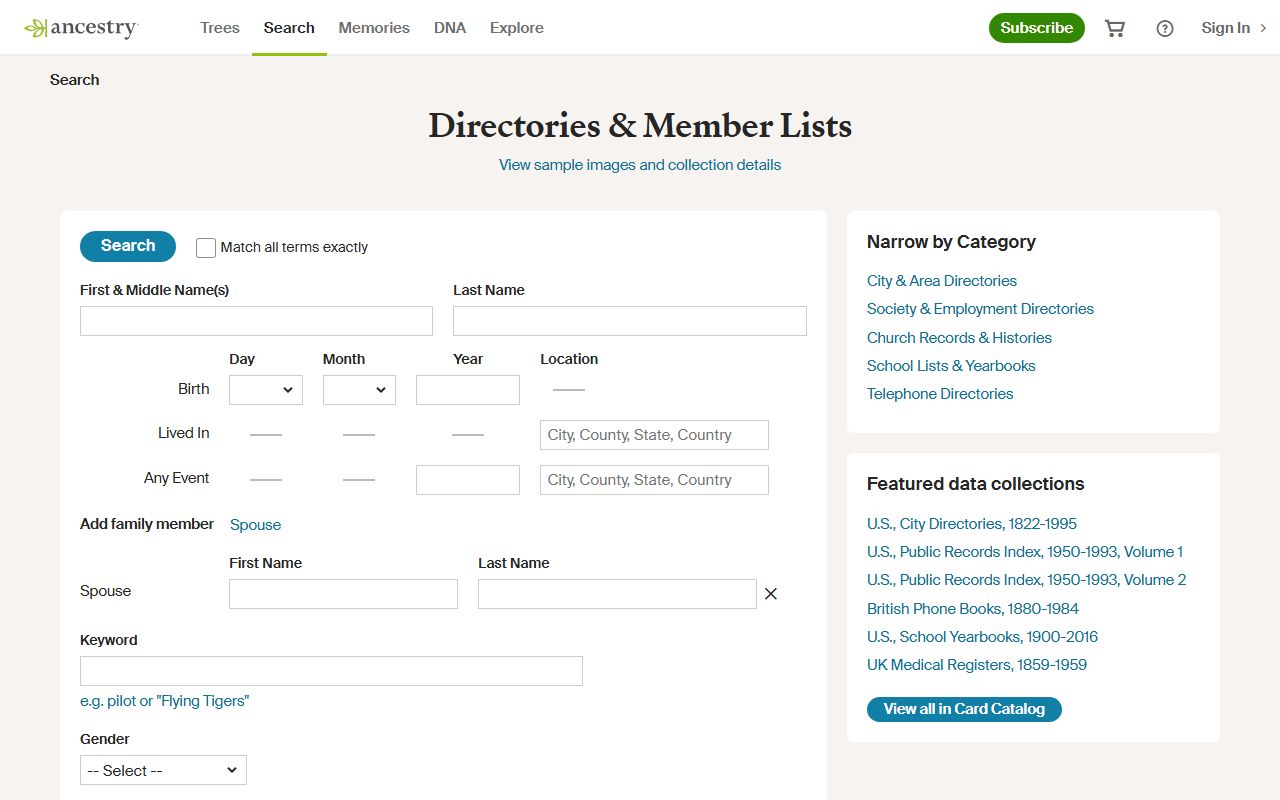
This broad index is a useful comparison source when a Smith County death record needs one more clue before you request a state copy.
Smith County Death Records Access Rules
Smith County death records still sit inside Tennessee law, even when the search begins with a local library or genealogy page. The Tennessee death records statutes explain the legal structure around registration and access. That helps when you want to know why a record is restricted, why ID is required, or why the state office handles the certified copy instead of the county.
The law also keeps the local role in its place. Smith County Public Library resources, TNGenWeb material, and the TSLA fact sheet can all help you identify the right person. They do not replace the formal state certificate. That split is important because a death record search can easily blur research help with legal copy rules if you do not keep the two steps separate.
The best way to manage that split is to use the county tools first and the state rules second. If the death is old, TSLA and local history matter more. If the death is recent, the state office is the right place to ask for the copy. That is why the Carthage and library trail is so useful in Smith County: it helps you identify the record before you pay for the wrong one.
Before you use the national vital statistics image below, open the source link first: CDC National Vital Statistics System.

This source helps explain the wider death-certificate system behind Smith County death records and Tennessee filing practice.