
Search Weakley County Death Records in Dresden
Weakley County death records work best when you start in Dresden and keep the search anchored to the county's archive and library trail. That local path matters because Weakley County was formed in 1823, the county seat is Dresden, and the record system has been shaped by courthouse history, volunteer archives work, and a strong local library presence. If you are trying to place a death in Weakley County, the first question is usually not whether a record exists, but which office or collection is most likely to hold the clue you need. For newer deaths, the Tennessee Vital Records office is the right certificate path. For older deaths, the Weakley County archives, the county library, and TSLA sources usually do more of the heavy lifting.
The county public records commission page is especially useful because it confirms that the Weakley County Archives is also called the Weakley County Preservation of Records and that local records are stored in more than one Dresden location, including the courthouse and the Archives Room at the Personal Development Center. That tells you the research trail is local, active, and still connected to the county seat. If a death record is hard to find, the practical answer is often to work the Dresden network first, then move to the state retention rules only after you know the approximate date.
Weakley County Death Records Facts
Weakley County Death Records in Dresden
Dresden is not just the county seat on paper. It is the practical center of Weakley County death records research because the county clerk, the archives, and the library all sit inside the same local government and research network. The county clerk page explains that the clerk is a constitutional officer, keeps county legislative body records, and records minutes that are open to public inspection. That does not make the clerk's office a death certificate office, but it does make it part of the broader record system that often points researchers to the right county contact, the right filing, or the right historical clue. For family historians, that context matters because a death search often starts with a place name before it ever starts with a certificate number.
The TSLA fact sheet for Weakley County adds the historical frame that helps narrow that search. It says the county was formed in 1823 from Indian lands, the county seat is Dresden, and there was a fire at the courthouse in 1948. It also lists the earliest local records TSLA associates with the county, including marriages from 1843, wills from 1828, a deed index from 1822, chancery court minutes from 1827, county court minutes from 1828, circuit court minutes from 1844, and tax books from 1842. Those dates are important because they show that Weakley County death work is rarely just about a modern certificate. It often requires moving through wills, tax books, probate, and local history before the death record itself becomes obvious.
The same TSLA fact sheet also points researchers toward county histories, surname indexes, and local record runs that help connect a person to Dresden, Martin, Greenfield, Sharon, or another Weakley County place. That is useful when a family story gives you only a township, a church, or a burial clue. In a county with a courthouse fire and a long record span, the safest approach is to search broadly at the local level before assuming the first index result is complete.
Before you use the Weakley County fact sheet image, start with the source page here: TSLA genealogical fact sheets about Weakley County.
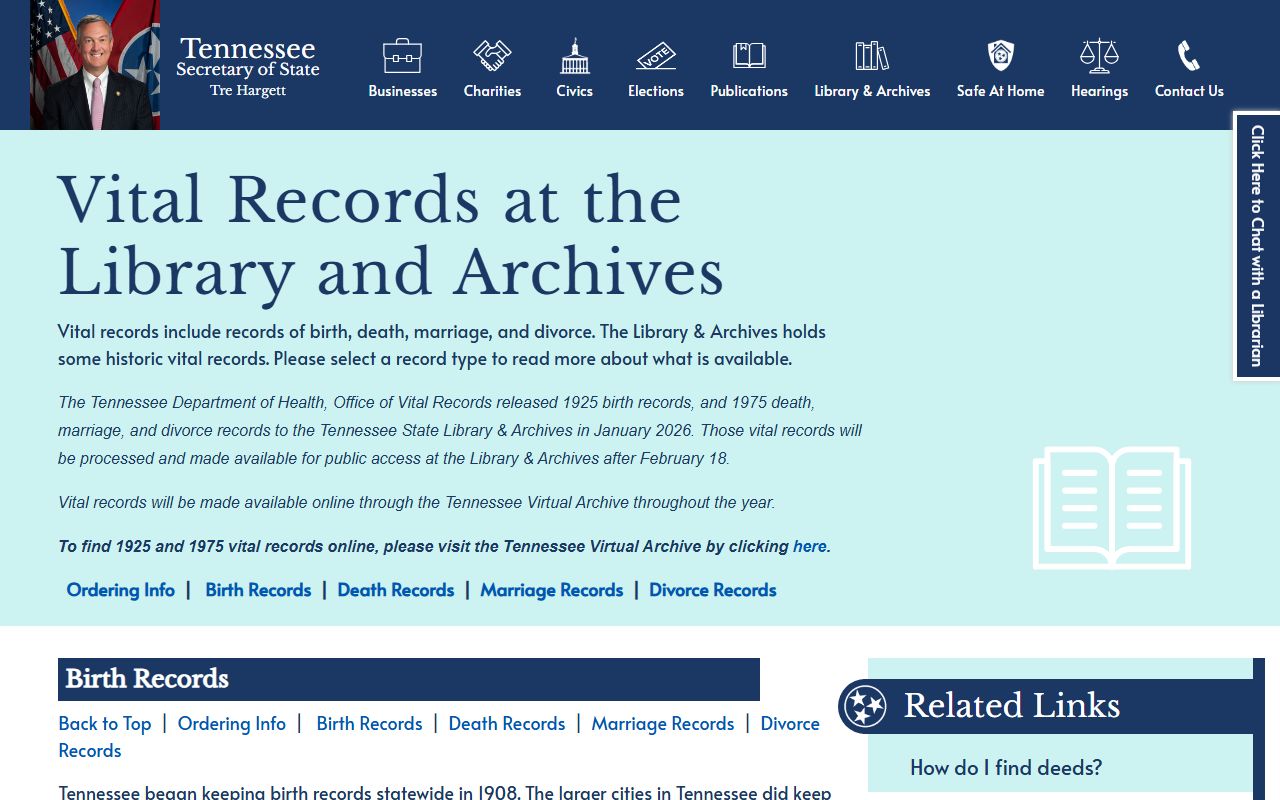
This page is the best county-history summary for tying a death search to Dresden, the 1823 county formation, the 1948 courthouse fire, and the older local record sets.
Before you use the county archive image, open the source page here: Weakley County Public Records Commission.

This source is the clearest local confirmation that the county archives are active in Dresden and that records are being preserved for public research.
Weakley County Death Records Archives
The Weakley County Archives is the most important local stop for older Weakley County death records because the office is designed around preservation, not just current filing. The archives page says records available there date back to 1823, that documents are stored in the courthouse and at the Archives Room in Dresden, and that volunteers help organize records and assist the public with requests. It also says the archives are open on Wednesdays from 8:30 a.m. until noon at 8250 Highway 22 in Dresden, with special appointments possible depending on availability. Those details matter because they tell you the archives are not a vague historical reference. They are an actual local access point with a specific weekly schedule and a real county address.
The archives page also notes that some volunteers work with the Weakley County Historical and Genealogical Society, which has knowledge of cemeteries, courthouses, and local Tennessee historical markers. That is exactly the kind of support that helps when a death record is hard to isolate. A cemetery marker can confirm a death year. A courthouse reference can point to probate. A marker can even help explain why a family moved between Dresden, Martin, or Greenfield. In a county research problem, those details often matter as much as the certificate itself.
The Ned R. McWherter Weakley County Library and Museum is the other key Dresden stop. The library page places it at 341 Linden Street near downtown Dresden and says it offers books, newspapers, public access computers, internet tools, Wi-Fi jetpacks, Chromebooks, and an online catalog. It also says the museum is open during library operating hours. That combination makes the library useful for death-record work that needs obituaries, local histories, city directories, and family background. When the archives point you to a surname or burial clue, the library is the place that can help you turn that clue into a usable search path.
Before you use the library image, start with the source page here: The Ned R. McWherter Weakley County Library and Museum.
The library is the right local stop when a death search needs context from newspapers, histories, or a librarian who can point you toward the county's own research tools.
Weakley County Death Certificates
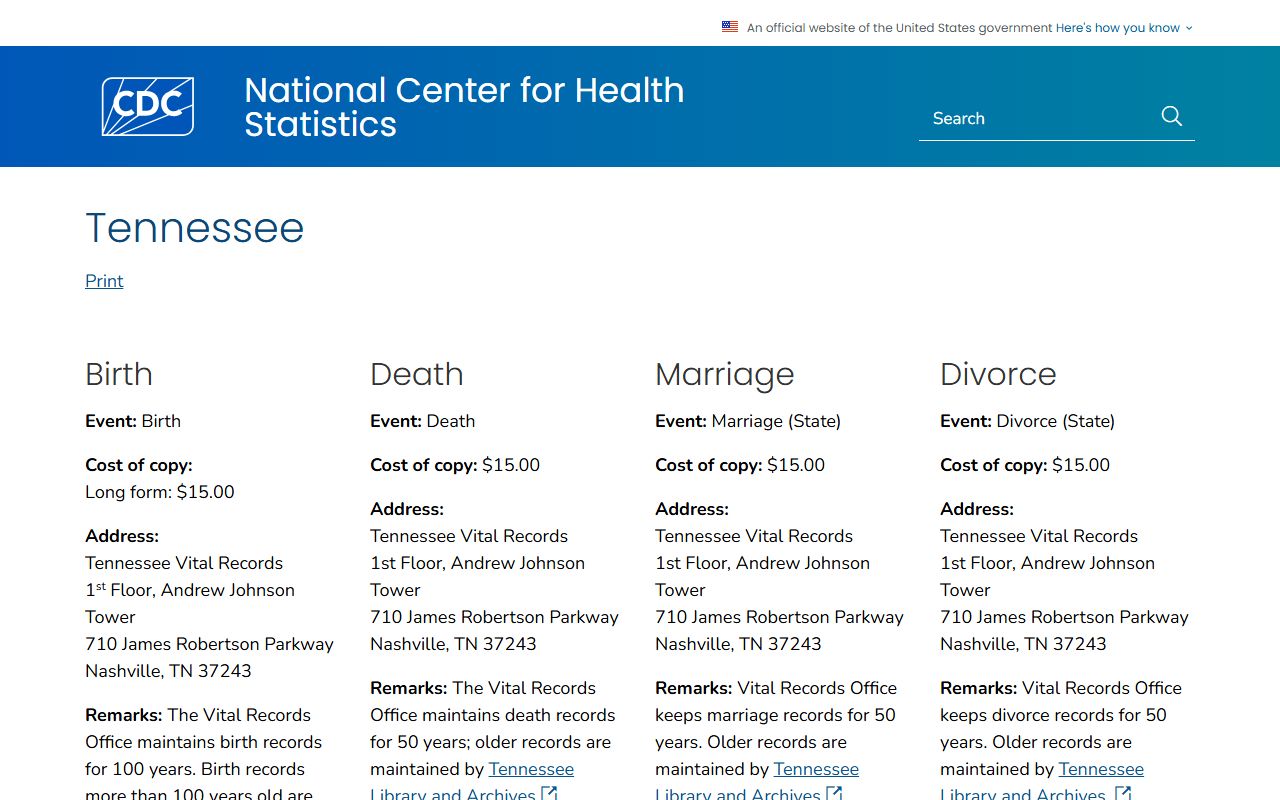
When you need a certified Weakley County death certificate, the Tennessee Vital Records office is the state-level source. The CDC's Tennessee vital records page gives the current Nashville address at 710 James Robertson Parkway in the Andrew Johnson Tower, the $15 certified copy fee, and the requirement that a photocopy of a valid government-issued ID with the requestor's signature accompany the request. It also states that Tennessee Vital Records maintains death records for 50 years and older records are maintained by Tennessee Library and Archives. That is the split you need to keep in mind when you are working a Weakley County death search. If the death is recent, use the state office. If it is older, move toward TSLA and local history.
The Tennessee death records law backs up that framework. Tennessee Code section 68-3-205 says the authenticating documents for birth, death, marriage, divorce, and annulment are treated as public records, even when they are held by a county clerk, court clerk, state registrar, or another authorized custodian. The same section says that once 50 years have passed after the date of death, the records in the custody of the state registrar are to be made available to the public under the applicable rules. For a researcher, that means a death search is partly about custody and partly about age. The right office changes with time.
The county clerk office is part of that practical path because it is the local office most people contact first when they need county guidance. In Weakley County, the clerk's office is at 116 West Main Street, Room 104, in Dresden, and the office handles county legislative records, public inspection of minutes, notary records, and other county duties. It is not the office that issues a modern death certificate, but it does sit inside the local government structure that researchers often need to navigate before they get to the state record request.
Before you use the CDC image, open the source page here: CDC Where to Write for Vital Records - Tennessee.
This page confirms the current Tennessee certificate order path, the fee, the Nashville address, and the ID rule that applies to certified copies.
Weakley County Death Records Search Paths
Older Weakley County death records often need a layered search because the county history is richer than a simple index result. TSLA's fact sheet and the county archives page point you toward the local record runs, but the state archives system is still the best bridge when the death happened before the modern certificate era or during the gap year between the first and second Tennessee death registration laws. The TSLA vital records guide explains that Tennessee's first statewide death registration law began in 1908 and that 1913 is the dead year between the first law and the second one. That matters in Weakley County because a death in that window may need cemetery, obituary, probate, or church records before a certificate can be confirmed.
The TSLA portal is the broader archive gateway for that kind of work. It leads researchers into county records, fact sheets, and the larger Tennessee research system. If a Weakley County death search stalls in the local archives, the portal is the next sane move. It is especially helpful when you need to cross-check a surname, a place, or a record type before you ask for copies or plan an in-person visit. The portal matters because it keeps the research connected to official archive access rather than to random copied indexes that may omit the clue you need.
The TSLA-Ancestry partnership is also useful for Weakley County because it includes Tennessee, U.S., Death Records, 1908-1965 and early city death records for Nashville, Knoxville, and Chattanooga. That does not replace the county archives, but it gives you a searchable statewide collection that is often faster than waiting on a manual lookup. For a Weakley County death that falls inside that period, it can give you the first strong index result, which is usually enough to aim the rest of the search. The collection is available through the Tennessee Electronic Library for Tennessee residents and through Ancestry subscriptions.
Before you use the TSLA portal image, open the source page here: Tennessee State Library and Archives portal.
The portal is the state backup when the Dresden trail needs a deeper county record search or a broader Tennessee archive entry point.
Before you use the Ancestry image, open the collection page here: Ancestry Tennessee records.
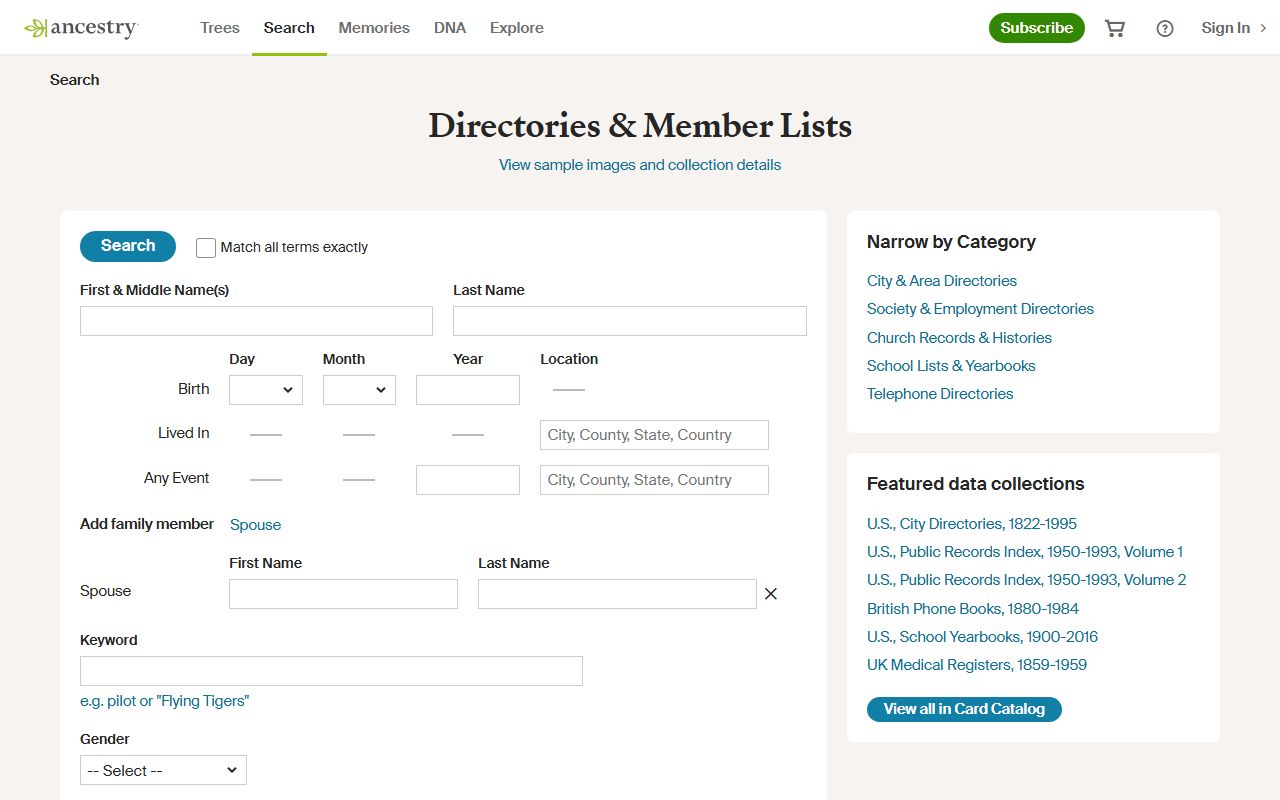
This collection is useful when you need a broad searchable index before turning back to the county archives or the state certificate request.
Weakley County Search Tips
Strong Weakley County death records searches usually start with three things: the name, the year range, and the Dresden-area place clue. If the person lived in or near Martin, Greenfield, Sharon, or another Weakley County community, keep that detail in the first round of searching because it may change which index entry shows up first. A spouse name, a cemetery name, or even a church affiliation can be enough to break an otherwise stalled search. That is why local research works best when you do not force the record to fit a single source too early.
For older cases, use the archive and library network before you worry about ordering a certificate. The archives can point you toward records, the library can help with newspapers and local history, and the county clerk office can help you understand which local office handles which kind of public record. If the death is more than 50 years old, TSLA becomes much more important. If the death is in 1913, expect a gap and search supporting records as if the official certificate may not exist. If the death is recent, the state office is the right first step and the county sources become support rather than the main path.
The National Vital Statistics System is useful background because it explains that death certificate data are the most complete source of mortality information in the United States. That matters in a county search because it reminds you why the formal certificate is still the anchor record even when the first clue comes from a cemetery, obituary, or county history note. The county trail helps you locate the person. The state record confirms the event.
Before you use the NVSS image, open the source page here: CDC National Vital Statistics System.
The NVSS page helps explain why death certificates remain the most complete national mortality record and why the certified copy still matters.
For Weakley County, the best overall formula is simple: start in Dresden, use the archives and library, confirm the county clerk context when needed, and move to the state office only after you know whether the death is modern, historical, or stuck in the 1913 gap. That keeps the search efficient and keeps you tied to the local sources that are most likely to have the right clue first.