
Find White County Death Records from Sparta
White County death records are easiest to handle when you begin in Sparta and work outward in layers. The county seat, the county archives, the public library, and the TSLA research guides all point in the same direction: identify the person first, then decide whether the best copy is a local research lead, an archive index, or a certified state certificate. That approach fits White County because the county has a long record trail, an active local history culture, and enough older material that a death can show up in a newspaper, cemetery record, probate file, or family history source before it turns up in a state search.
White County Death Records Facts
White County Death Records in Sparta
The TSLA county fact sheet is the cleanest starting point for White County because it anchors the county in place and time. TSLA says White County was formed in 1806 from Jackson and Smith counties, and that the county seat is Sparta. It also lists the kinds of older material that matter to death research, including wills from 1806, county court minutes from 1806, a deed index from 1809, tax books from 1811, and marriage records from 1838. Those dates matter because they tell you White County research is not just a modern certificate search. It is a county history search with depth.
The same TSLA page also points to White County newspapers and local record holdings that can help you narrow a death. It notes that newspapers were published in Bon Air and Sparta, that scattered early issues survive from 1820, and that a complete run begins in 1967. That is useful when a death date is uncertain or when an obituary, funeral notice, or family reference may be easier to find than the certificate itself. When the death is older, White County often rewards the researcher who starts with local context instead of jumping straight to a formal request.
Before you use the White County TSLA fallback image below, open the county fact sheet here: Genealogical fact sheets about White County.
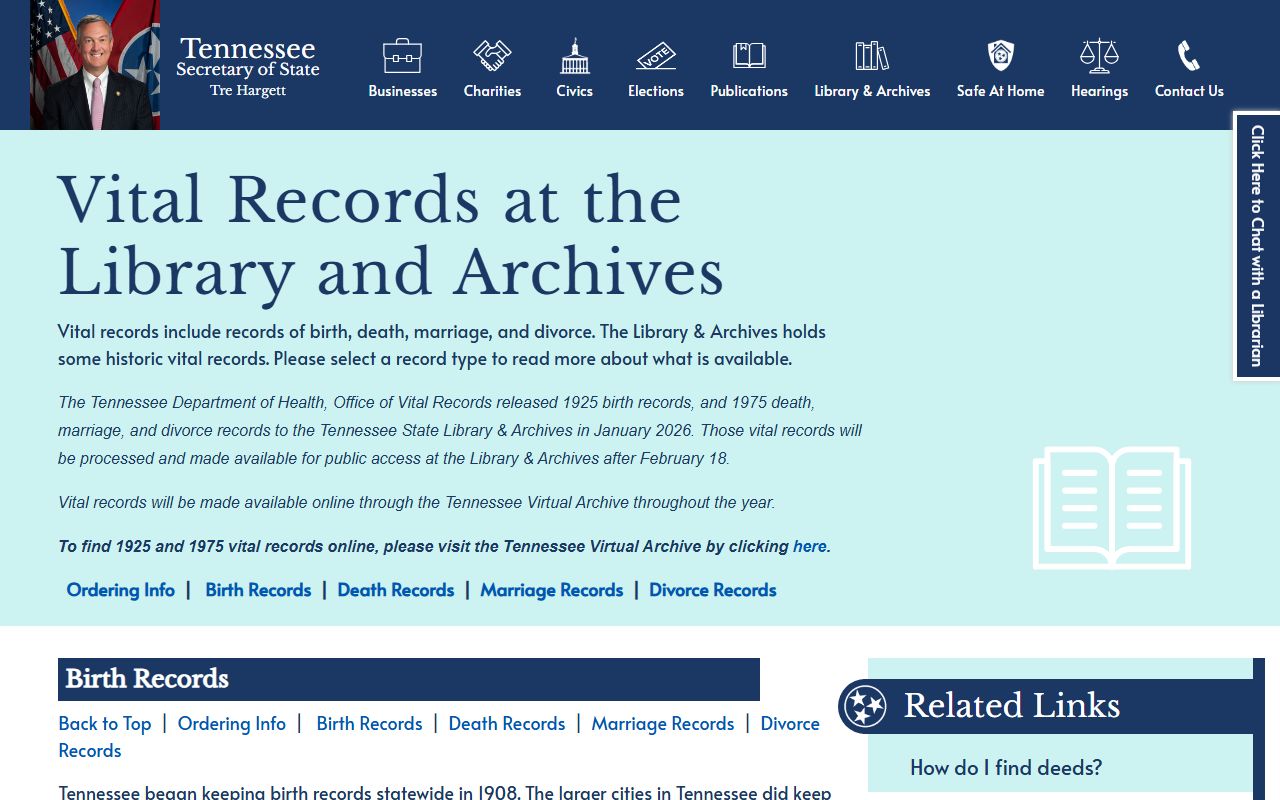
This county-history image fits the White County fact sheet because it points you to the records, dates, and local publication trail that make a Sparta search work well.
White County archives reinforce that same local path. The White County Archives says the department promotes and preserves White County heritage through records management and can help locate civil and criminal court records, marriage and divorce records, probate court information, and more. The archives office is at 1 East Bockman Way, Room 304, Sparta, TN 38583, which makes it a practical stop when a death search turns into a court or probate question.
White County Death Records Archives
The White County Archives and the White County Public Library work well together for the same reason: both are close to the county seat and both support research, not just transactions. The White County Public Library says it provides books, videos, other materials for loan, computers, wireless internet, and programming for all ages. That makes the library a good first stop when you need an obituary clue, a family grouping, or a local-history reference that can narrow the death year before you order anything.
Sparta research also benefits from the White County Historical and Genealogical Society noted on the archives page. The archives department says the society provides a large collection of family history books and records for research resources and on-site access to online genealogical tools. That matters because White County death research often depends on more than one record set. A probate file may point to a cemetery record, a newspaper note may point to a family line, or a family history book may point back to the right death year.
The White County TNGenWeb site adds another local layer. Its research aids page links the White County Public Library, the White County Archives, TSLA, and early White County records on microfilm. Its records-and-data page also points to White County obituaries, the TNGenWeb Historical News Index, and a statewide Tennessee death records index. In practice, that gives you a county-specific way to move from a name to a likely source before you choose a certified copy route.
Before you use the White County TSLA portal image below, open the state archive gateway here: Tennessee State Library and Archives portal.

This fallback image matches the archive path that White County researchers use when the library, archives office, or county fact sheet points them toward older records.
White County Death Records Access
When a White County death is recent enough to need a certified copy, the Tennessee Department of Health remains the correct state path. The CDC Tennessee vital records page is the current state ordering reference, and the CDC write-for-vital-records guidance shows the practical details that matter: death certificates cost $15, a valid government-issued ID with the requestor’s signature is required, and Tennessee Vital Records maintains death records for 50 years before older records move to TSLA. That split is the key to deciding whether you need the state office or the archive path first.
For White County, that 50-year rule is important because it marks the line between a modern certificate request and a historical record search. If the death falls inside the current state-retained period, use the Tennessee vital records process. If it is older, TSLA may hold the record or an index that helps you locate it. Either way, the official copy path and the research path are not the same thing, and White County searches work better when you keep that distinction clear.
Before you use the White County vital-records image below, open the CDC Tennessee page first: CDC Tennessee vital records information.
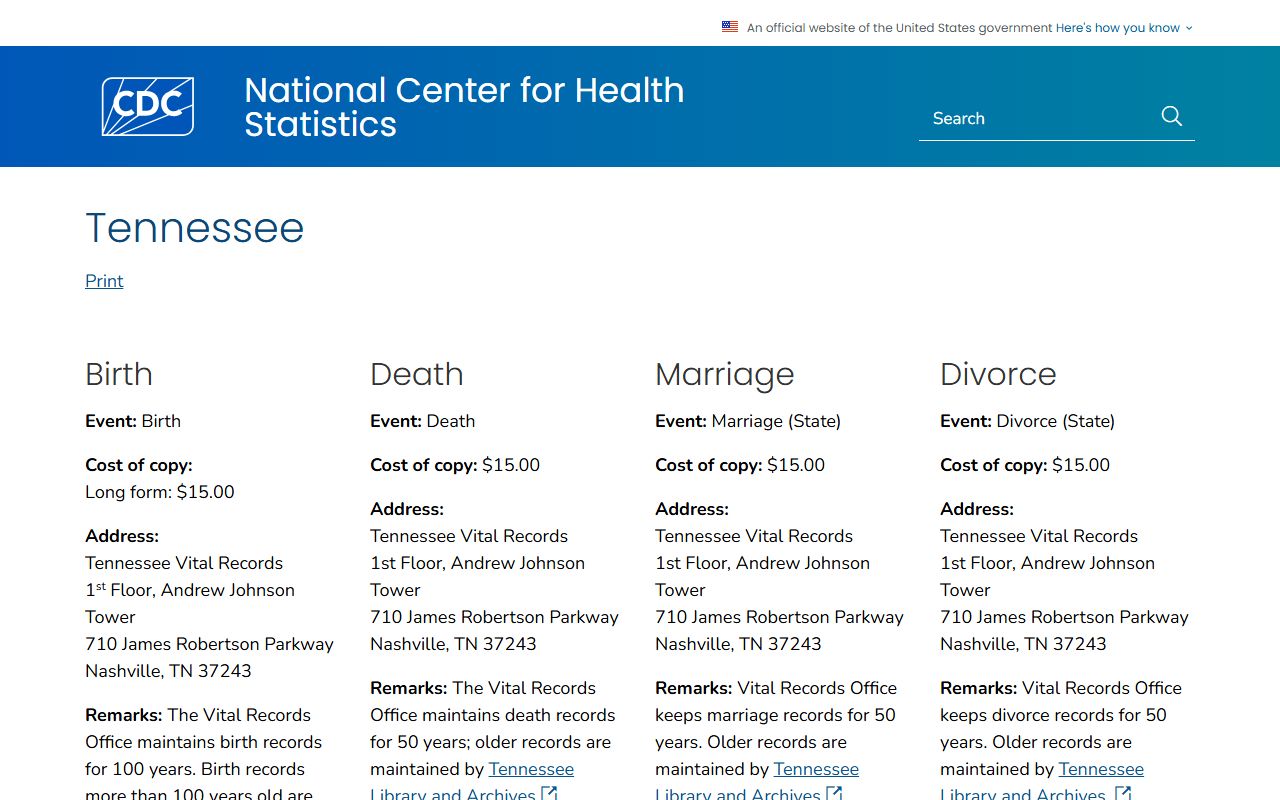
This image represents the state certificate route, which is the right next step when a White County death record has to be ordered instead of researched.
The legal framework sits behind that process in Tennessee law. Section 68-3-205 says that when fifty years have passed after the date of death, the records in the custody of the state registrar are made available to the public in accordance with regulations that protect the records. The same statute also says microfilm copies in the state library and archives, or in a local library, are available for public inspection. That is one reason the White County library and archives path stays useful even when the final answer comes from the state.
The TSLA vital-records guide adds an important date layer. It explains that Tennessee did not require death records until 1908, that the first law expired at the end of 1912, and that 1913 is commonly treated as a dead year before the new law took effect in 1914. The guide also says TSLA has searchable indexes that include the name of the deceased, the county, the year of death, and the certificate number. For White County, that means an apparent gap in a search does not automatically mean the death was never recorded.
Before you use the White County TSLA guide image below, open the guide here: Vital Records at the Library and Archives.
This fallback image supports the older-record route, where the White County index, the archives office, and TSLA can be more useful than a direct certificate request.
How To Work A White County Search
The best White County death search starts with the simple pieces and then adds local context. Use the full name, then add Sparta, Bon Air, or another White County place clue if you have it. If the surname is common, add a spouse, parent, child, or cemetery clue. White County records are broad enough that a death can appear in a newspaper index, a county court reference, a cemetery list, or a family-history book before it shows up in a statewide search result.
Use this order when you are trying to identify a White County death record:
- Start with the TSLA White County fact sheet to confirm the county seat, formation date, and older record groups.
- Check the White County Archives and Public Library for Sparta-based help, family history books, and probate or court references.
- Use TNGenWeb for obituaries, death notices, cemetery references, and statewide index clues.
- Move to TSLA when the death is older or when you need a certificate number, microfilm lead, or county index.
- Use Tennessee Vital Records when the death is recent enough that a certified copy is still held at the state level.
That order works because it matches how White County material is actually organized. The county resources help you identify the person in Sparta and the surrounding communities, while the state resources handle the formal copy or index once the person is clear. It is faster to use the local trail first than to start with a generic statewide search and hope the surname lands in the right place.
TSLA also notes that Tennessee death records from 1908 to 1965 are available online through an Ancestry partnership on the TSLA Ancestry records page. That is useful for White County because it lets you compare a county clue with a statewide index before you spend time on a formal request. The broader Ancestry Tennessee records collection is especially helpful when you need to sort out a common surname, a missing middle name, or an uncertain decade.
Before you use the White County Ancestry image below, open the Tennessee records page first: Ancestry Tennessee records.
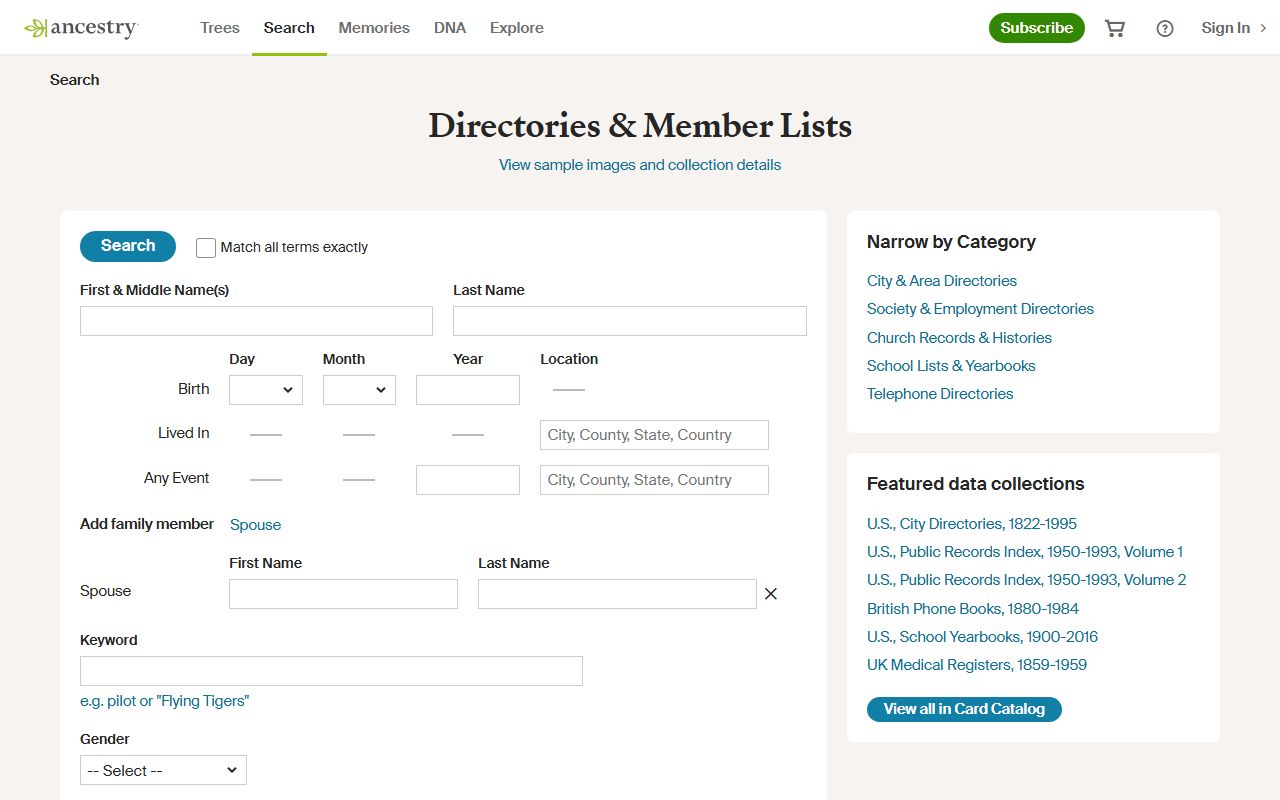
This image fits the broader index stage, where White County researchers often use a statewide clue before returning to Sparta for the local record trail.
When you want the national context behind the record system, the CDC National Vital Statistics System page is a useful final reference. CDC says NVSS provides the most complete data on births and deaths in the United States, and it notes that death certificate data are the most comprehensive source of information on mortality, including cause of death. That is not a replacement for White County records, but it explains why the county certificate, the archive index, and the state file all connect to the same underlying event.
Before you use the White County NVSS image below, open the CDC page first: CDC National Vital Statistics System.

This final image ties the White County search back to the larger mortality system that underlies Tennessee and national death records.
White County death research usually works best when you keep Sparta, the archives, the library, TSLA, and the state certificate path in the same mental map. That keeps the search focused, prevents wasted requests, and makes it easier to decide when a record is older history and when it is still a current certificate issue.